Abare Matsuri 2026 Experience
Every summer, the quiet town of Ushitsu in Noto Town transforms into one of Japan’s wildest festivals. Abare Matsuri (あばれ祭), literally “The Rampage Festival,” is famous for its seemingly destructive treatment of its portable shrine, or mikoshi. Instead of carefully protecting the sacred object, participants slam it against the ground, throw it into the river, and even set it near fire.
A Brief History
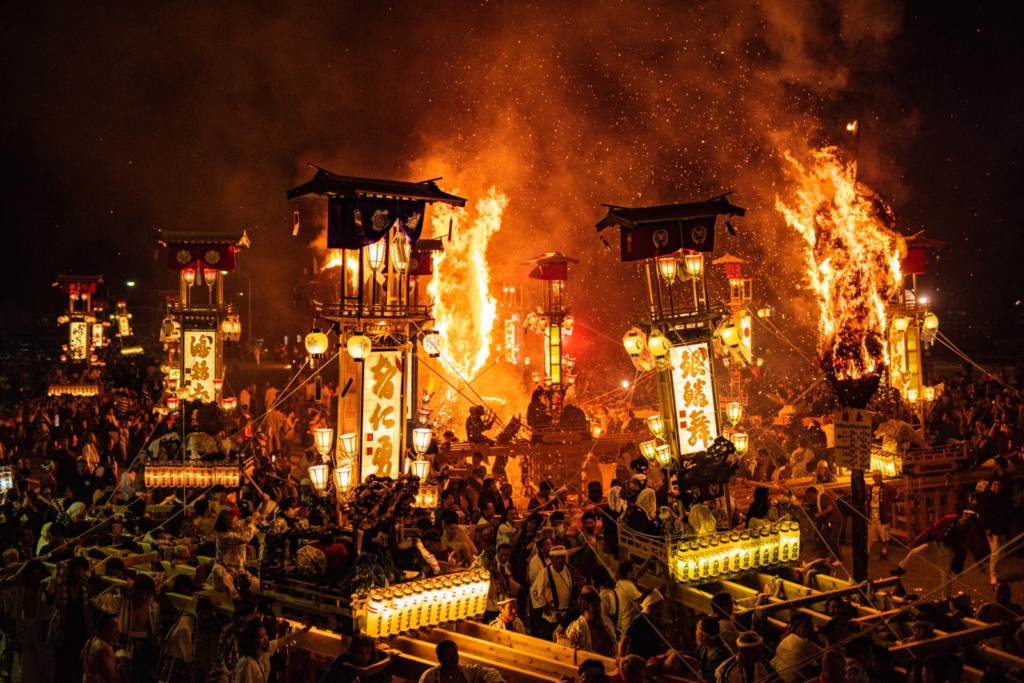
The Abare Festival originated over 350 years ago, during the Kanbun era (1661–1672), after prayers to Gozu Tennō were believed to end a local epidemic. In gratitude, residents carried Kiriko lanterns to Yasaka Shrine, giving rise to the festival tradition. Today, the festival is renowned for its towering Kiriko lanterns and the dramatic ritual of throwing portable shrines (mikoshi) into the rivers, and fire, making it one of Japan’s most dynamic and energetic coastal festivals.
What is Kiriko and Mikoshi?
Kiriko (キリコ)
Kiriko is enormous, illuminated lantern floats unique to the Noto Peninsula. Built from wood and paper, they are carried through town by teams of local residents while accompanied by taiko drums, flutes, and chanting.
Mikoshi (神輿)
A mikoshi is a portable shrine believed to temporarily house a deity during a festival. While many Japanese festivals treat the mikoshi with great care, Abare Matsuri is famous for doing exactly the opposite.
あばれ祭について – 【公式】あばれ祭公式サイト | 石川県能登町宇出津
Highlight 1: The Kiriko Parade
What happens during the Kiriko Parade?
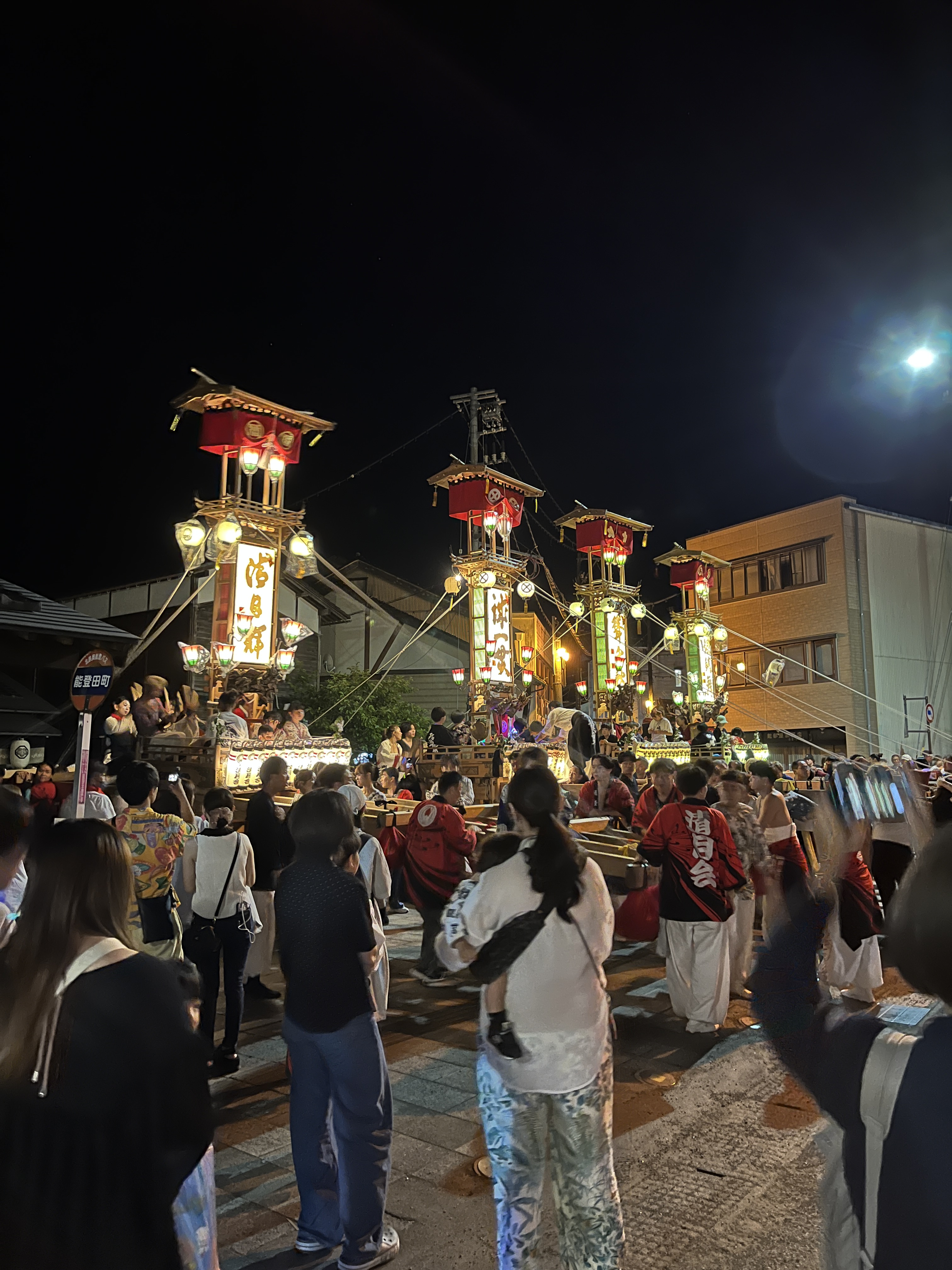
The evening began with the procession of the magnificent Kiriko lantern floats. Towering above the crowd, these massive illuminated structures slowly made their way through the streets, accompanied by the rhythmic beat of taiko drums, the sound of bamboo flutes, and the energetic chants of their bearers.


Highlight 2: The Mikoshi’s Frenzy Entry
The mikoshi rampage begins
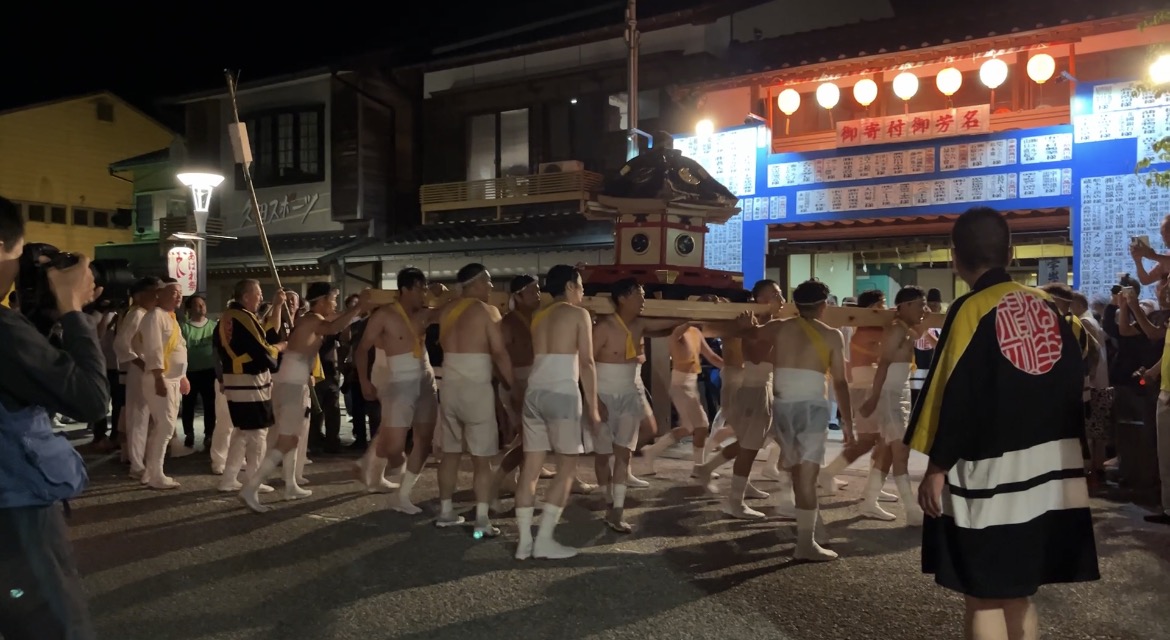
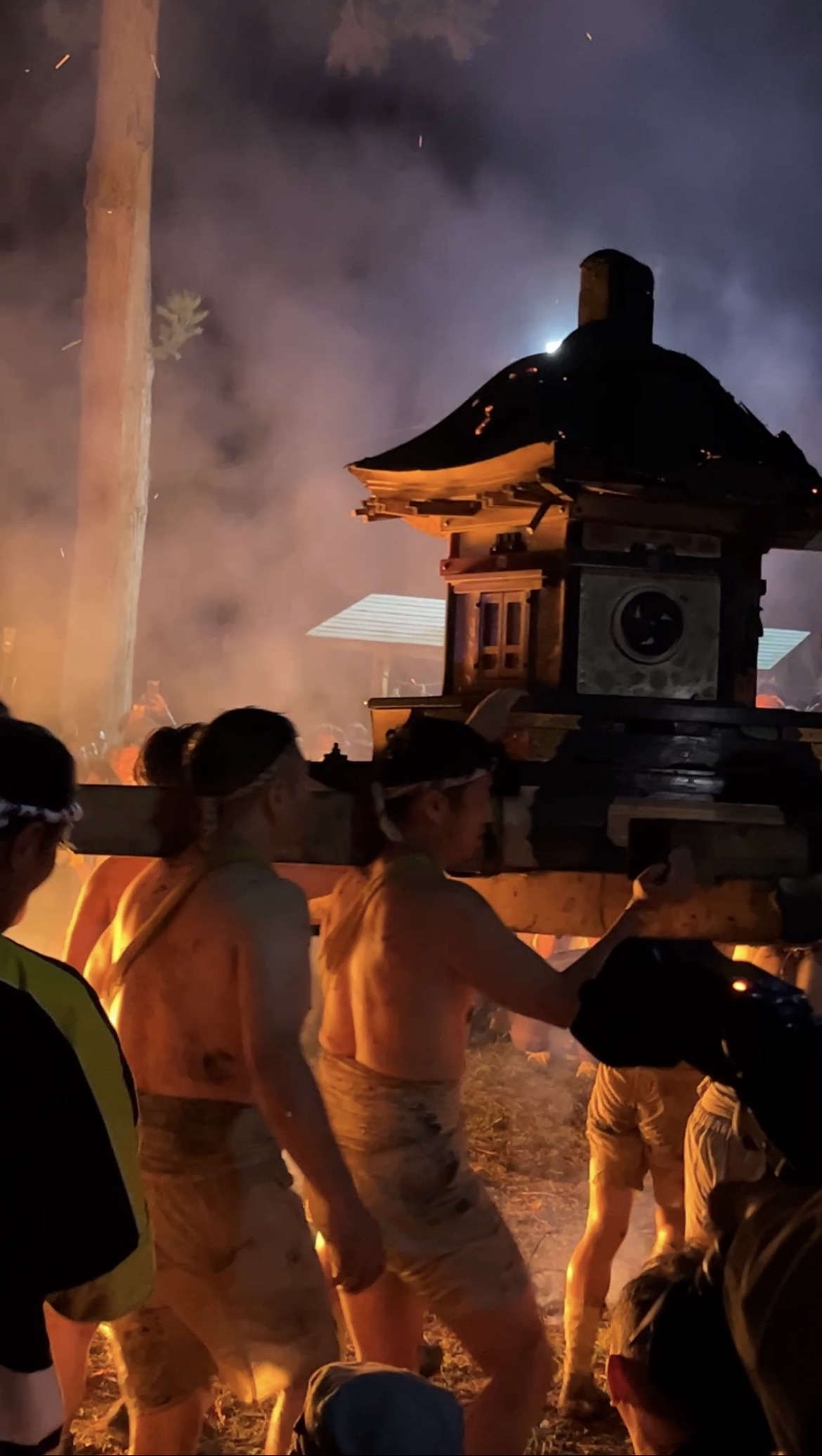
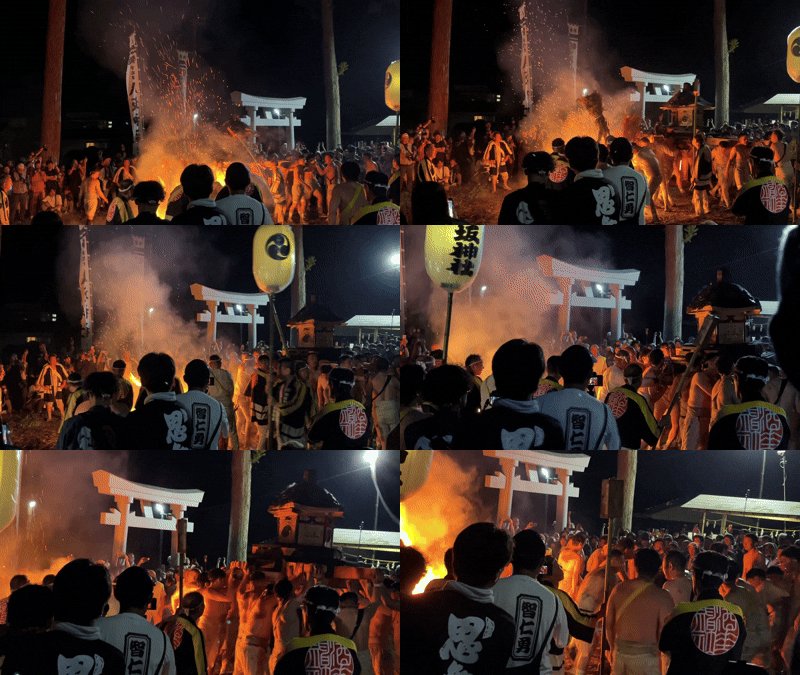
As the portable shrine entered the festival grounds, the crowd erupted into chants of “Chōsan! Chōsan!” The once-orderly procession transformed into controlled chaos as the bearers spun, lifted, and violently shook the mikoshi, crashing it into the ground and against nearby structures.
Unlike most Japanese festivals, where the mikoshi is treated with great care, Abare Matsuri embraces the opposite. The shrine is intentionally battered as an act of devotion, with participants believing that the deity welcomes displays of strength and courage.
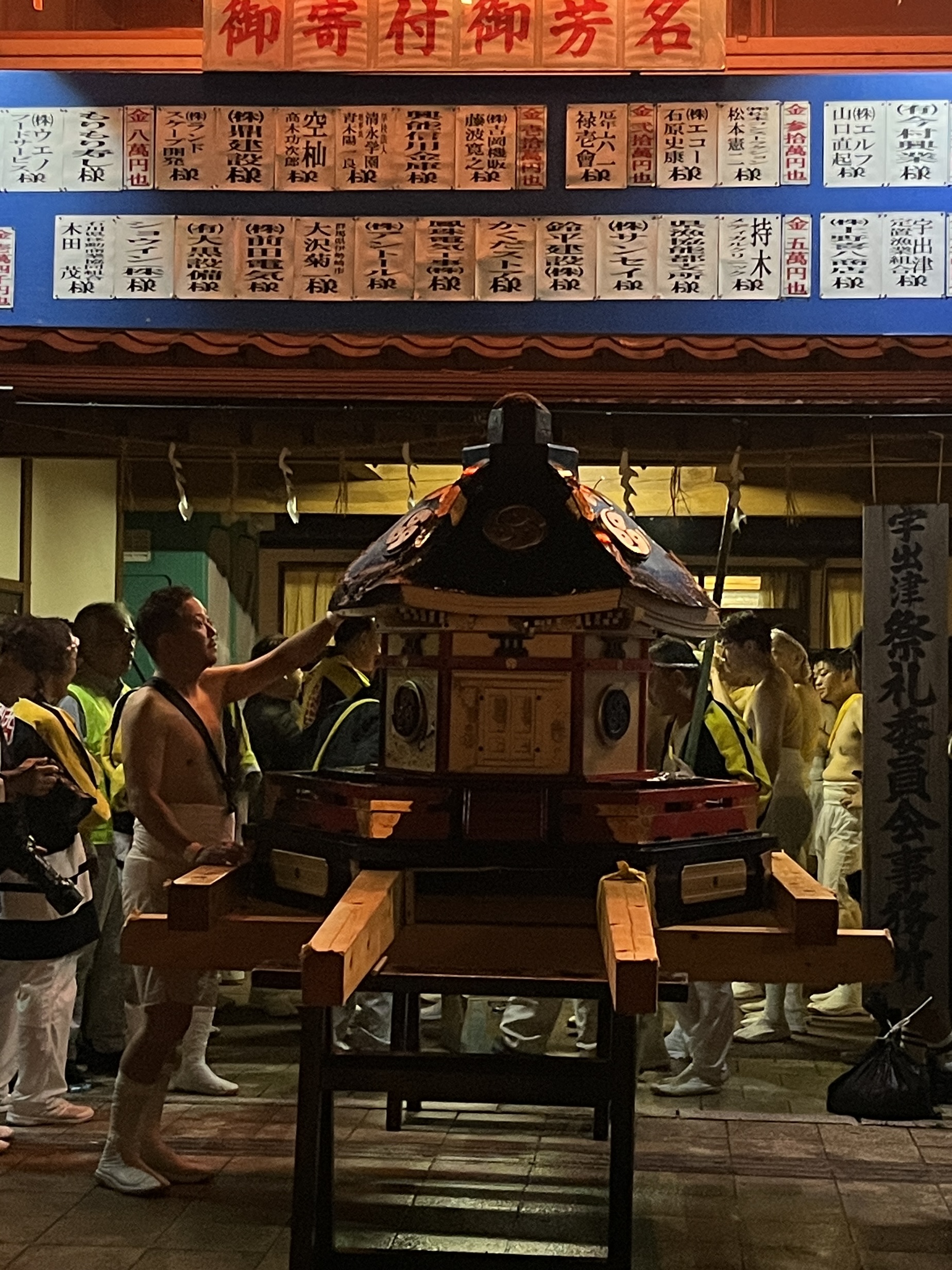
Between bursts of intense movement, the mikoshi was briefly rested while the carriers caught their breath. During these pauses, it was repaired, rebalanced, and even ceremonially bathed with sake before the procession resumed.
One interesting tradition I learned was that only men are permitted to carry and handle the mikoshi throughout the festival.
Highlight 3: The Mikoshi, Taimatsu and Water
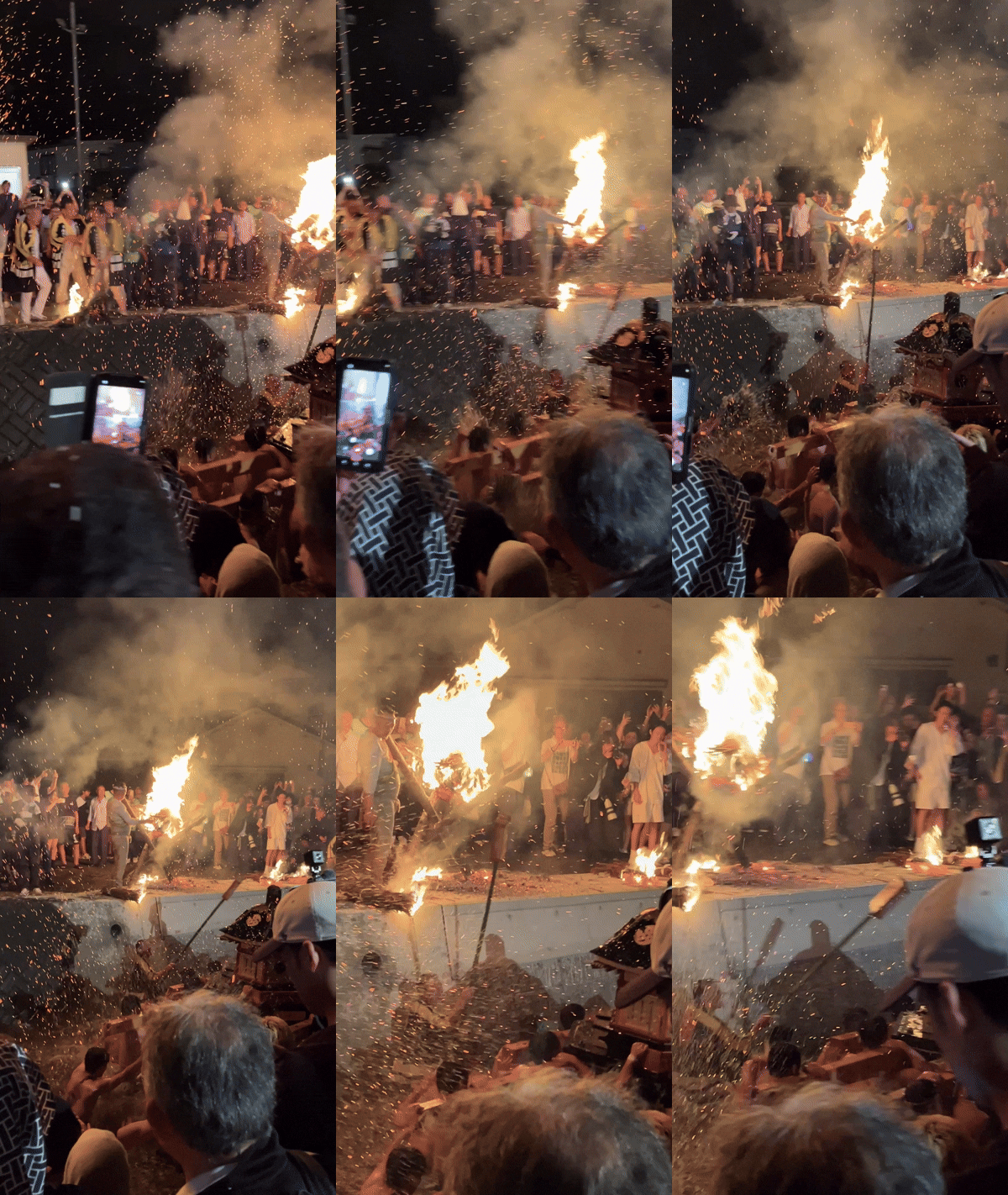
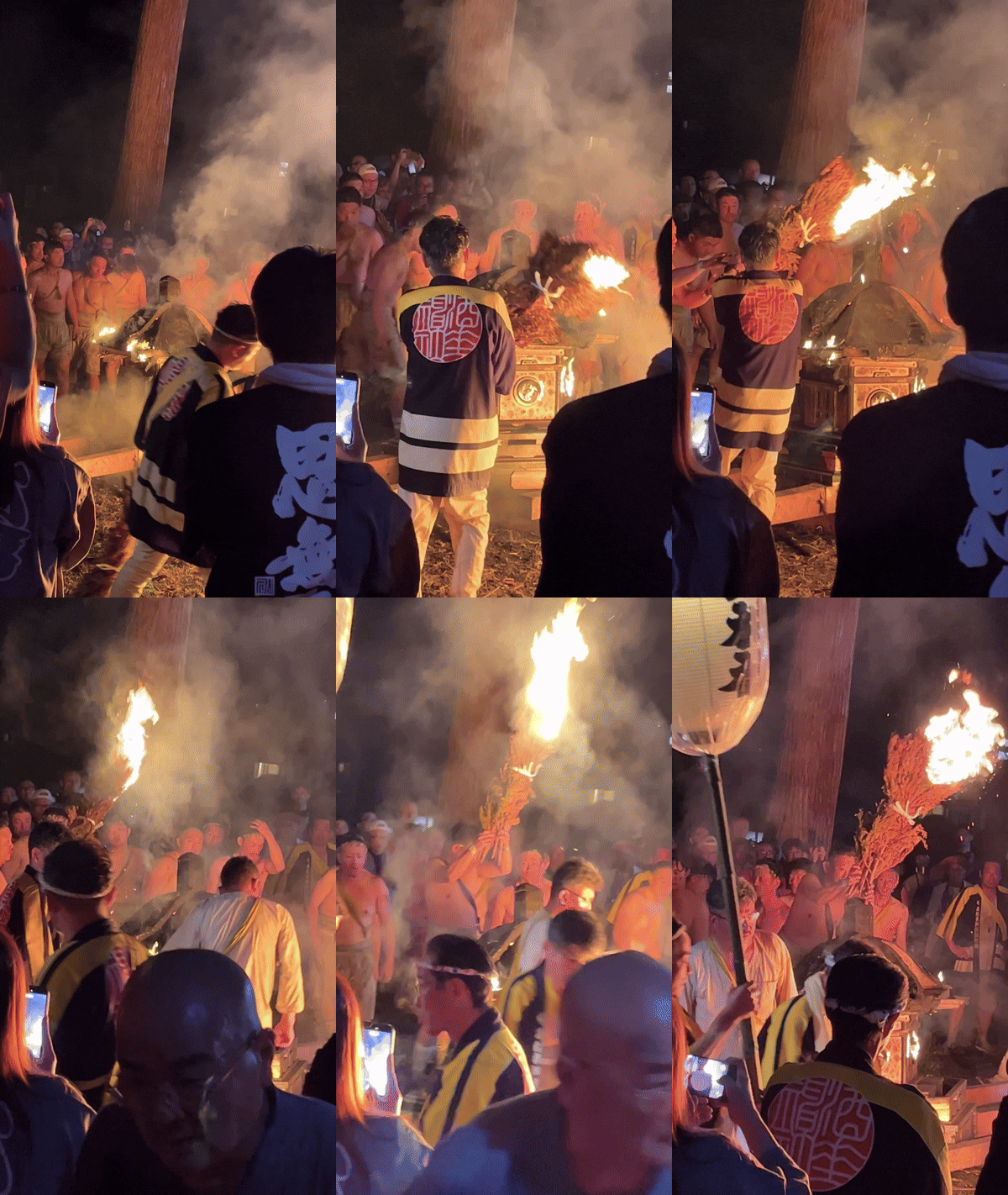
Mikoshi being drowned, thrashed and subjected to fire sparks
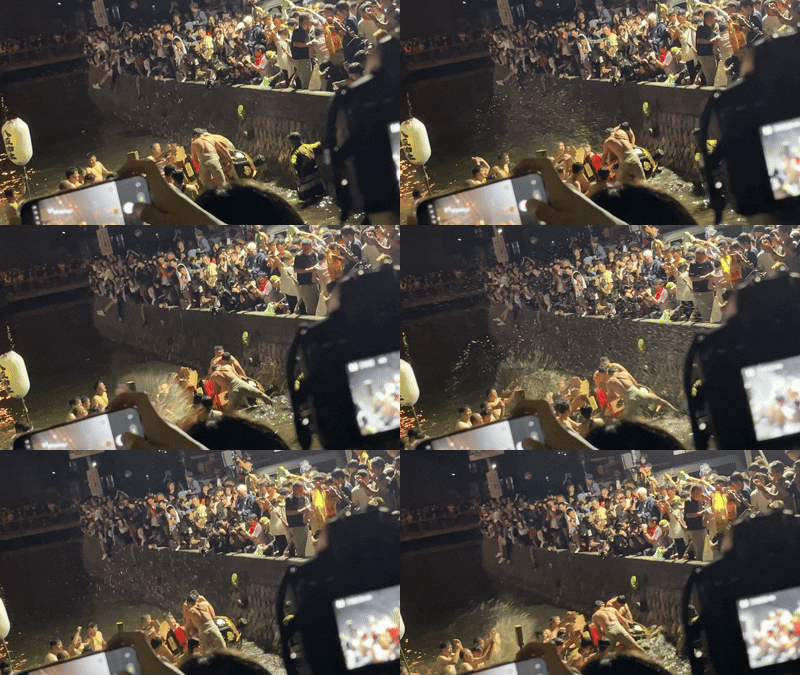
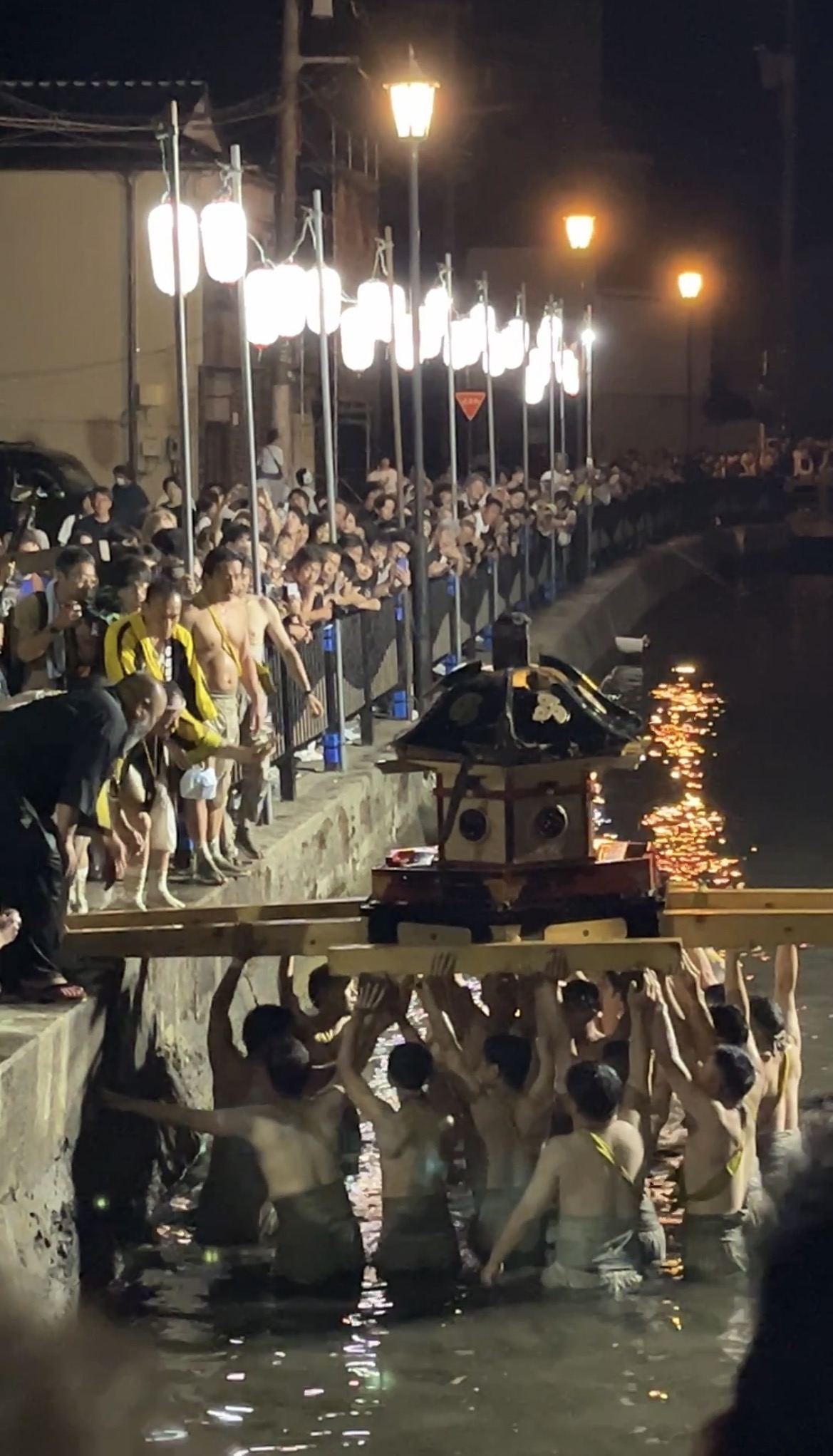
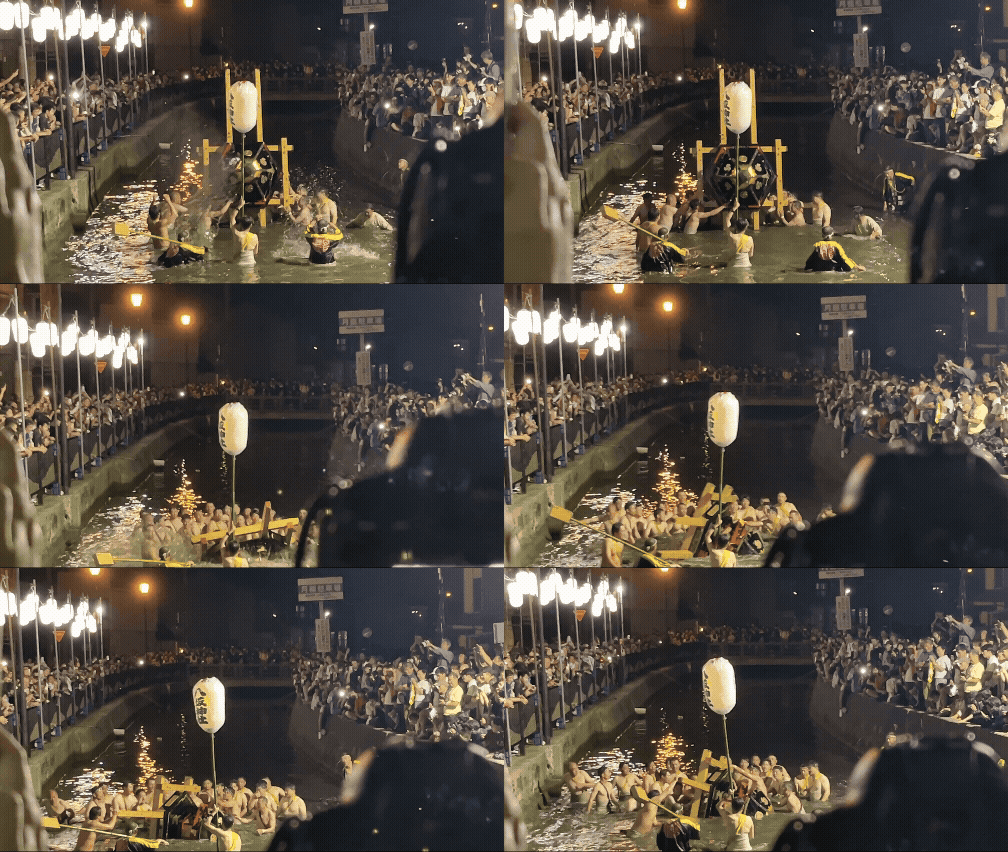
The mikoshi was carried directly into the nearby river, where the bearers repeatedly slammed it against the stone embankment before rolling it through waist-deep water. Seeing a sacred object deliberately thrown into the river was both surprising and mesmerizing, especially for someone more familiar with festivals where mikoshi are carefully protected.
Soon after came another iconic moment: the lighting of the enormous taimatsu, a towering torch constructed from bundles of Ate (Japanese hiba) branches. Standing nearby felt like being caught in a shower of glowing embers as burning leaves drifted through the night sky.

Highlight 4: The Grand Finale
Climax back at the shrine
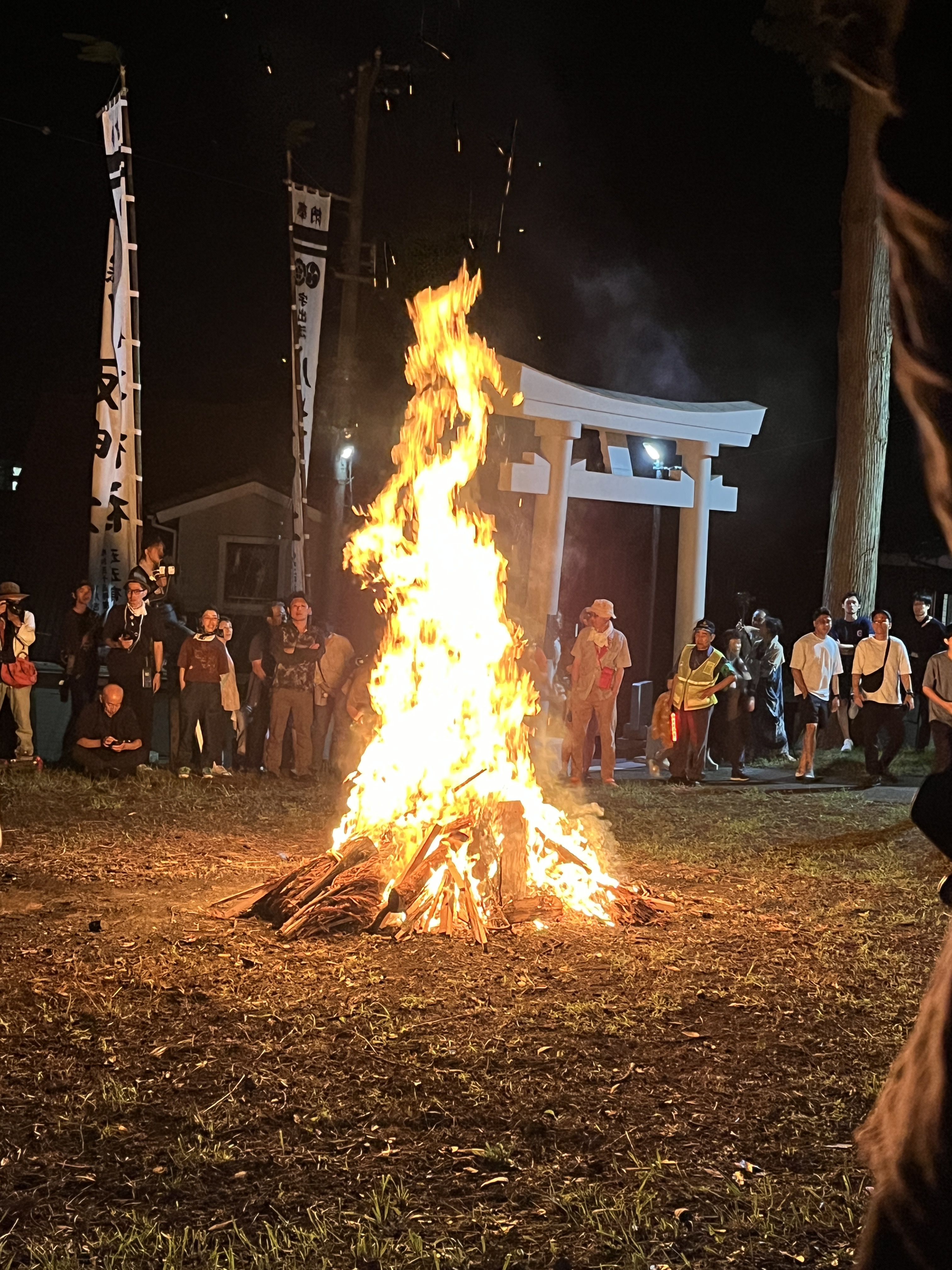
Large bundles of Ate branches were piled into a blazing bonfire as the battered mikoshi was carried directly toward the flames. Time and time again, the bearers circled the fire, lifting, spinning, and slamming the shrine while allowing parts of it to be scorched by the intense heat.
Throughout the ritual, they paused only briefly to make quick repairs whenever pieces threatened to fall apart before charging back into the fire once more.
By the end of the night, the once-pristine mikoshi had been soaked in water, showered with sparks, blackened by smoke, and partially burned—yet it remained standing. Watching the shrine endure one final trial by fire was a fitting conclusion to one of Japan’s most extraordinary festivals.


 ジョイの歩き方|Joy no Arukikata